An online student outlet for long form journalism, personal essays, and creative writing
The “Best” Supporting Character Award Goes To..., Daisy Buchanan
Taylor Caesar
Apr 3
4 min read
Photo credit - Nataliya Vaitkevich
SATIRE
There are only a few characters who have graced American literature with their chaotic charm, balanced with a curation of flair, more than Daisy Buchanan in F. Scott Fitzgerald’s “The Great Gatsby.” While some readers praise Gatsby’s powerful ambition or Nick’s reserved perceptiveness, those who are more intellectual would applaud Daisy’s grand becoming of the quiet, powerful and competent driving force of this novel. She is a marvelous person, like gold and glitter, surprising at first, but then inescapable once it settles upon everything she touches.
When we first lay our eyes on Daisy, she appears to fit into this common role of a fragile woman who becomes an object of desire. One of the essences of description relies on her voice. Daisy speaks in a way that teeters between laughter and collapse. Which, thankfully, demonstrates her ability to act decisively in any way, shape, or form. Looking at things, this is the peak of Daisy’s brilliance. While we have other characters who continuously tire themselves out by amassing fortunes, articulating their moral compasses or chasing fever dreams, Daisy is one who simply exists, and in doing so, she becomes the conductor who orchestrates the novel's emotional and economic symphony. The way Gatsby throws the most extravagant parties reshapes his image and conjures his identity, all for the love of Daisy. To extinguish neutrality, Nick has to make sure he has a good moral sense of her. Then you have Tom, although he has a bluster, he wraps himself around her like an angry, thick fog flooding the dock. Daisy never needed to act; as she is the one who inspires action, making her the most effective character.
Those who have praised the book have painted Daisy as being careless, flat and even inconclusive. This, of course, is a simple scholarly error of how logical Daisy is, realistically. Why would you trouble about making difficult choices, when you can allow different circumstances and the kind gentlemen around to decide for you?
The master of disguised innocence, as tenable as it is, has been mastered by Daisy Buchanan. When emotional confrontation arises, Daisy doesn't lose her cool. She just flows, and by flowing, she ensures that direct threats are avoided and that nothing sticks to her back. The level of skill she possesses is so cultivating that after reading the novel, she remained the center of the novel’s tragedy and distanced herself from the nature of consequences. Now that is an excellent notion.
One of the most powerful and heavily referenced tools in her belt would be her voice. As it is notoriously remarked as “full of money,” it also deserves to be recognized as an atmosphere. The fellows who engage in Daisy’s company don’t just listen to her; they consume her like alcohol.
There is no way that Gatsby, a man who built his entire identity, reinvented himself, driven by true desire, is unraveled by the erect appeal of Daisy Buchanan by mere luck. This world is one where everyone is striving in their own light. Daisy has been walking this road for some time, not because she rooted herself, but because she personifies it.
Even looking at Daisy in her most unappealing moments can be reimaged as an indication of her excellence. Where we see others suffer from moral discouragement, an upfront reading offers insight into a calculated self-survival tactic. Her own comfort was prioritized and protected by the lines of consistency with thick borders of esteem. This novel is filled with a plethora of characters who end up destroying themselves as they chase unrealistic ideals they believe will fill the lonely holes in their hearts. Daisy stands above all else, as the only true one who understands a key indispensable principle. Survival can be easy when you only carry your own bag. Why be a true hero when you can be an invulnerable force?
However, one cannot stray from the cultural context that our noble author, F. Scott Fitzgerald, is attuned to. Daisy has more than one function. One is a literal human being, but the other is a very important symbol. Daisy represents prosperity, charm, and the subtle notions of the American Dream. Looking at the qualities created, distant and surprisingly depressing when looking at the smaller details. But with that, Daisy still excels. While Gatsby eventually croaks under the weight of his illusions and Nick has to leave, no longer having an anchor in West Egg, Daisy continues nonetheless. There is no change in her stride, nor a burden. She is a prize that never truly had to be won in order to be put in the display case, the unjustifiable dream.
At the end of it all, the award for “best” supporting character goes to Daisy Buchanan from the novel, “The Great Gatsby.” Now, this may sound challenging, but it is actually oddly logical. She influences the narrative in such a vast way without trying at all. She shapes those results without any risk of liability and leaves a paper trail of results she never has to compile.
Through the narrative of yearning, passion and the inquiry into connection, Daisy gives us a path we didn't know we had. One that is strategic in detachment, quietly overpowers and has control of things just out of others' reach. If there is nothing else to say about her, she proves that the most competent role in the eyes of human drama is the one who never has to try in actuality, but still always creates the most friction.
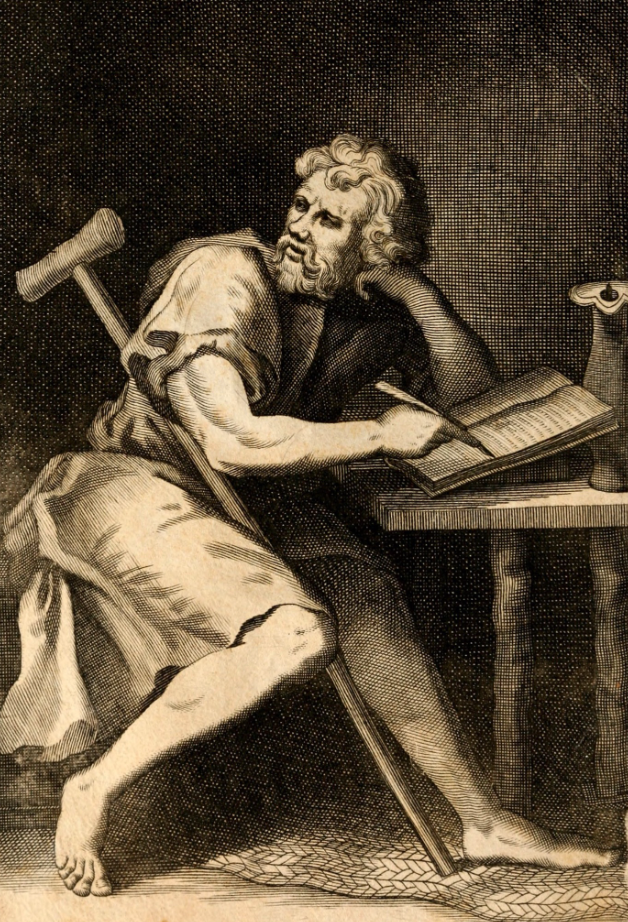
Picture two piles. Everything you control goes into the first one. Into the second one goes everything you don't. Epictetus believed most of our suffering comes from mixing up the piles. We pour our energy, worry and self-worth into the second pile, then feel helpless when it doesn't obey.
Election Day is less than a month away, and Washington has been sending mixed signals about whether the threat of having armed federal immigration agents showing up at the polls still stands.




Comments