An online student outlet for long form journalism, personal essays, and creative writing
What is your Favorite Book?
Djemima Duvernat
Apr 17
4 min read
Photo Credit: Djemima Duvernat
When someone asks me about my favorite book, the answer comes with no hesitation: “The Catcher in the Rye." The truth goes beyond how amazing the book itself is; my love for the book is attached to the day I received it. It was my very first English class in the United States; I was drowning, not in the Atlantic Ocean I had crossed to get here, but in the sea of unfamiliar language. I felt so lonely even though I was surrounded by other students. I was overwhelmed by my confusion. The voices around me blurred into a kind of static I could not decipher, and I sat in that plastic chair, feeling like a ghost in my own body. Then my teacher handed me a French translation of J.D Salinger’s novel, and in that moment, everything changed. Suddenly, I felt seen; I no longer felt so alone.
My teacher could have given me a simplified English version, or not cared at all. Instead, she handed me love wrapped in beautiful literature in a language I could understand. She was telling me that while I learned a brand-new language, I didn’t have to lose myself. I am not sure if she was aware of what that gesture meant for me. A book in an English class is such a small thing to hand to someone, and yet the weight of it, the intention behind it meant the whole world to me. Without using words, she told me that I belong there just like any other student in the class. Her kindness opened a door for me, but it was Holden Caulfield who walked me through it.
What I love the most about the novel is the protagonist’s honesty and vulnerability. From the first line to the last one, he was completely honest with his audience, offering himself just as he was. It was the total opposite of what I was doing to fit into this new country. I was obsessed with doing things perfectly, from smoothing over my accent to the constant translating happening in my head. Every word that came out of my mouth was rehearsed beforehand and checked for errors like a student before an exam. Holden’s messy way of speaking gave me a sense of comfort; he spoke in fragments and repetitions just as his thoughts formed in his mind. Reading the novel in French gave me a strange kind of experience; it felt nostalgic in a way where if I didn’t hold on to this book, then I would disappear before I knew it. There was something deeply sad about reading a book set in New York, a city I could see from a distance, in the language of a home I had left behind. The two worlds met inside those pages, and for a few hours, I belonged to both at once.
When my English improved, and I read the novel in its original language, I experienced a different feeling. I was able to pick exactly what the author was portraying in the novel. The rhythm of “and all” and “it really did.” These words were the rhythm of a mind speaking to itself, and then letting it out for the world to see. These small linguistic patterns were so real, more real than I felt in my own body. Reading the same story twice, in two different languages, felt like watching the same film in color after seeing it in black and white. The story had not changed, but I had, and that changed everything about how I received it. The second reading was not a repetition; it was a completion. It closed a wound that I did not realize that I had.
This realization taught me something very valuable. I had focused on being perfect and not making mistakes, and I had forgotten that language could be an instrument of truth rather than plain accuracy. Holden showed me that my voice mattered more than perfection. I was navigating the gap between languages and cultures, and in my pursuit of perfection, I had forgotten who I was. I had treated English like a costume, something to put on carefully each morning so that no one would notice I was different underneath. But Holden, he never put on a show. He was the real him the entire novel; he showed up raw and vulnerable and refused to apologize. That was what made him unforgettable. The novel’s core idea of a catcher in the rye who saves children from falling off a cliff becomes a metaphor for my own life experience. Moving to a new country has its own kind of loss of innocence. I left behind not just a place, but I left home and an entire version of myself, a version who was happy, who moved through the world with ease and confidence, who never had to think twice before speaking. A version I tried hard to recreate.
Holden’s world was full of phoniness, people who performed roles that they did not question, who said the right things but did not mean them. I recognized myself immediately. I was part of the same people wearing masks to survive the day. I was constantly performing; I had so many versions of myself that I had lost track of the original. There was the version of me who smiled and chatted on the phone with my mother even when I was dying in class. There was the version of me who cried herself to sleep and cried some more in the shower in the hope of muffling the noise. None of those versions were bad or lies; they were survival. But survival and authenticity are not the same thing at all, and reading Holden’s furious refusal to pretend reminded me that I did not want to disappear into one of those versions of me. "The Catcher in the Rye" is my favorite book, not because it is perfect, but because it is the opposite. It taught me that being broken and honest is worth more than being fake and polished. I carry that lesson with me in every language I speak. When I write now, in English, I try to remember what Holden taught me; my accent is not something to smooth over, it is the proof of a journey. Every imperfect sentence I have ever spoken in these languages is a mark of someone who crossed an ocean and refused in the end to disappear.
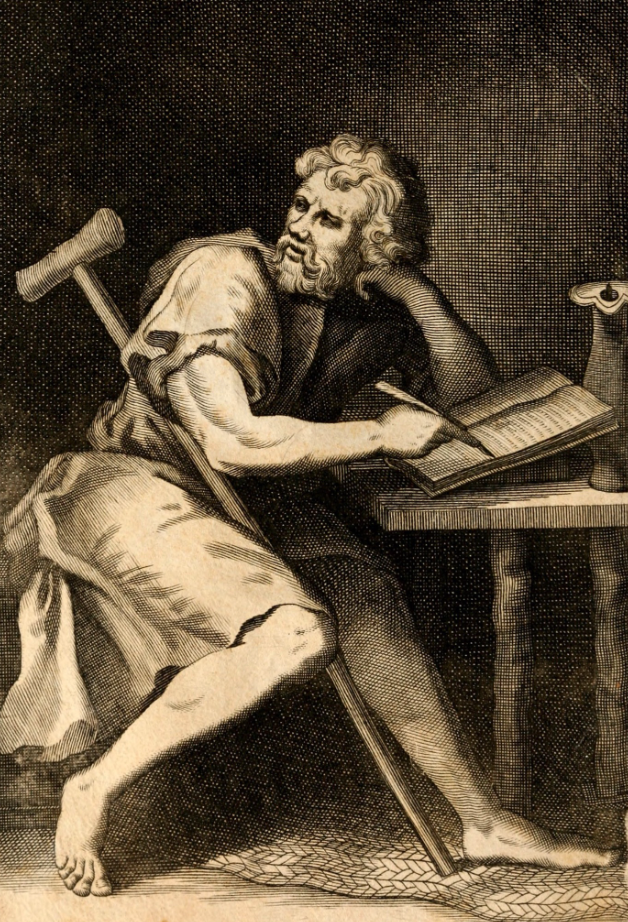
Picture two piles. Everything you control goes into the first one. Into the second one goes everything you don't. Epictetus believed most of our suffering comes from mixing up the piles. We pour our energy, worry and self-worth into the second pile, then feel helpless when it doesn't obey.
Election Day is less than a month away, and Washington has been sending mixed signals about whether the threat of having armed federal immigration agents showing up at the polls still stands.




Comments