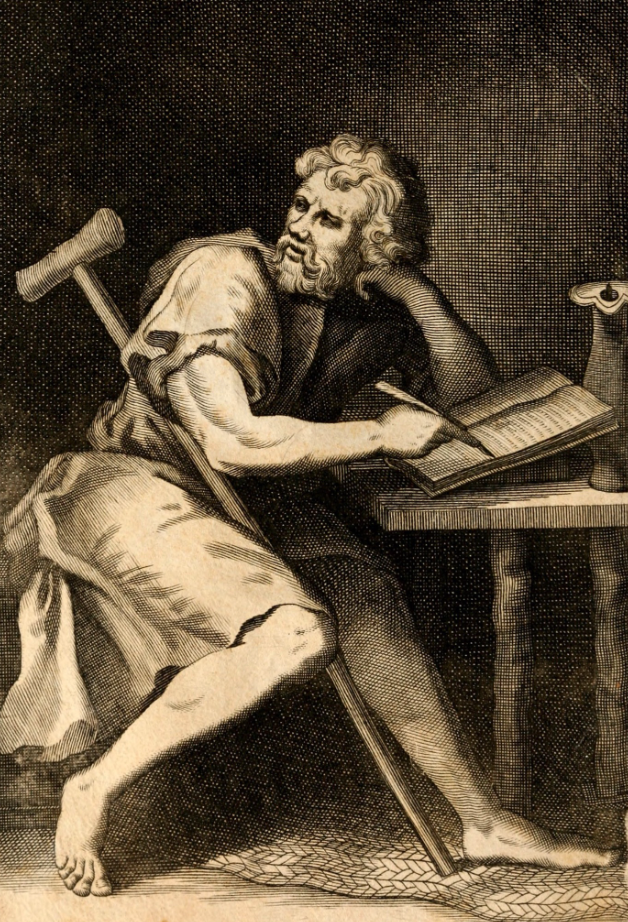
His name was Epictetus. He was born enslaved in the Roman Empire around 50 AD, walked with a permanent limp, and owned almost nothing his whole life. After gaining his freedom, he became one of the most influential teachers of Stoicism, a philosophy that began in Athens and later drew a Roman emperor, Marcus Aurelius, among its admirers. Stoicism has a reputation problem today. People hear the word and picture someone cold and emotionless, gritting their teeth through life. That's not what the Stoics were after. They wanted something far more useful: a clear head and a calm mind in a world that refuses to cooperate.
At the center of Epictetus's teaching is one simple idea, often called the dichotomy of control. It opens his short handbook, the Enchiridion, and it goes roughly like this: some things are up to us and some things are not.
That's it. It sounds almost too obvious to be philosophy. But try actually sorting your life by it.
What's up to you? Your judgments, your choices, your effort, how you treat people, what you pay attention to. What's not up to you? Nearly everything else: other people's opinions, whether your crush texts you back, the job market, the algorithm, your professor's mood, your reputation. Epictetus wouldn't say these things are unimportant. They're simply not yours to command.
Picture two piles. Everything you control goes into the first one. Into the second one goes everything you don't. Epictetus believed most of our suffering comes from mixing up the piles. We pour our energy, worry and self-worth into the second pile, then feel helpless when it doesn't obey.
Now look at how our generation spends its days. So much of modern life is engineered to keep our attention on pile two. Likes, follower counts, views, read receipts, rankings, endless comparison with carefully edited lives. We check them constantly, as if checking could change them. It can't. A post's numbers don't climb because you refresh it. A friend doesn't reply faster because you stare at "seen." The anxiety so many people describe isn't proof that something is wrong with them. It's what naturally happens when you tie your peace of mind to things you were never in charge of.
Here's where the idea becomes practical, not just comforting. The dichotomy of control isn't an excuse to stop caring. It's a way of moving your care to where it actually does something.
Take an exam. You can't control the final grade. The questions, the curve and the grader are factors out of your hands. But you control how you study, whether you go to office hours, and whether you sleep the night before. Epictetus would tell you to make those your goal. If you prepare well, you've succeeded at the part that was in your control no matter what number comes back. That shift often improves the number too, because energy spent worrying is energy not spent preparing.
The same goes for relationships. You can't make someone like you, but you can be honest, kind and reliable. You can't control whether a job application gets picked, but you can control how carefully you write it and how many you send. You can't control what strangers think of your post, but you can decide whether you're posting it for them or for yourself.
Here's a simple way to try it. The next time you feel that familiar knot of stress, stop and ask yourself: "Is this up to me?" If so, do the next small thing about it. If not, name it, set it in the second pile and turn back to something you can act on. It won't work perfectly at first. For the Stoics, philosophy was a daily practice, not a switch you flip once.
None of this means life gets easy. Bad things still happen, and Stoicism never pretends otherwise. What it offers is a kind of freedom no one can take from you. Epictetus knew something about that. He spent his early life with almost no control over his own circumstances, and still concluded that the most important thing; how he met those circumstances, was always his.
So, sort the piles. Spend your life on the first one. The second was never yours to carry.



Comments